
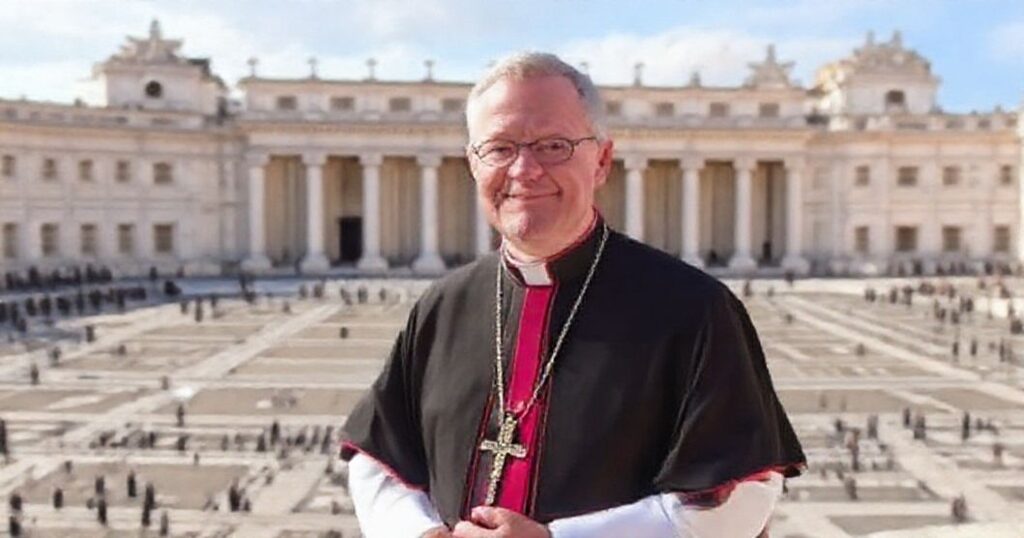
A New Era for the Catholic Community in England and Wales
In a move that signals a significant transition for religious and civic life in the United Kingdom, Pope Francis has officially appointed Richard Moth as the new Bishop of Westminster. This prestigious role carries the weight of leading the Catholic Church in England and Wales, succeeding Cardinal Vincent Nichols, who is entering retirement after a distinguished tenure. The appointment, announced formally via the Vatican Press Office, marks the beginning of a fresh chapter for the country’s four million Catholics and the thousands of professionals who work within the church’s extensive network of schools, charities, and administrative bodies.
The Core Story: A Succession of Leadership
Richard Moth, who previously served as the Bishop of Arundel and Brighton, is no stranger to the complexities of diocesan management. His appointment to the See of Westminster is the culmination of a rigorous selection process that involves consultation with the Apostolic Nuncio and the Dicastery for Bishops in Rome. As the new Bishop of Westminster, Moth will not only oversee the spiritual direction of his archdiocese but will also traditionally serve as the President of the Catholic Bishops’ Conference of England and Wales.
Cardinal Vincent Nichols, the outgoing leader, has been a prominent figure in British public life for over a decade. Having reached the customary retirement age of 75, Nichols submitted his resignation to the Pope, which has now been accepted. His legacy is defined by his efforts to navigate the church through a period of rapid social change, including the challenges of the pandemic and the ongoing dialogue regarding the church’s role in modern secular society.
Expert Analysis: Navigating a Changing Socio-Religious Landscape
The appointment of Richard Moth comes at a time when religious institutions are facing increasing pressure to remain relevant in a post-secular world. Analysts suggest that Moth’s leadership style—often described as pragmatic and pastoral—will be essential in addressing the dual challenges of declining church attendance and the rising demand for the church’s social services. The Bishop of Westminster serves as a bridge between the Vatican and the British government, playing a crucial role in diplomatic relations and public policy discussions on issues ranging from migration to social welfare.
Furthermore, this transition occurs amidst broader global trends within the Catholic Church, where Pope Francis has emphasized a more “synodal” approach—one that encourages greater participation from the laity. How Bishop Moth implements this vision within the culturally diverse and politically complex environment of England and Wales will be closely watched by observers worldwide.
Industry Impact: Beyond the Pulpit
The Catholic Church is one of the largest non-state providers of social services and education in the United Kingdom. With over 2,000 schools and hundreds of charitable organizations under its umbrella, a change at the top has far-reaching implications for the “third sector.”
- Education: The Bishop of Westminster holds significant influence over the Catholic Education Service (CES), impacting policy for hundreds of thousands of students.
- Charitable Operations: Organizations like CAFOD and Caritas Social Action Network rely on the support and strategic direction of the Bishops’ Conference.
- Interfaith Relations: The new leader will be a key representative in the Council of Christians and Jews and other inter-religious bodies, maintaining social cohesion in the UK.
Career and Job Implications for Professionals
For the JobHouse Global audience, this leadership change is more than a religious milestone; it is a corporate transition in one of the world’s oldest and most complex organizations. Leadership transitions of this magnitude often lead to a ripple effect of administrative and operational restructuring. Professionals working in faith-based NGOs, educational administration, and community development should anticipate a shift in strategic priorities.
Under new leadership, there is often a renewed focus on specific social issues, which can lead to new funding opportunities and job creation in sectors like refugee support, mental health services, and environmental advocacy. For students and early-career professionals, understanding the governance of such institutions is vital, as the Catholic Church remains a major employer for teachers, social workers, accountants, and legal experts across the UK.
Conclusion: Looking Forward
As Richard Moth prepares to take his seat at Westminster Cathedral, the focus remains on his ability to unify a diverse congregation and engage with a secular public. His predecessor, Cardinal Nichols, leaves behind a robust infrastructure, but the path ahead requires innovation and a deep commitment to social justice. For the professional world, this appointment serves as a reminder of the enduring influence of institutional leadership and the vital role that faith-based organizations play in the global economy and local communities alike.
Source: Vatican Press Office