
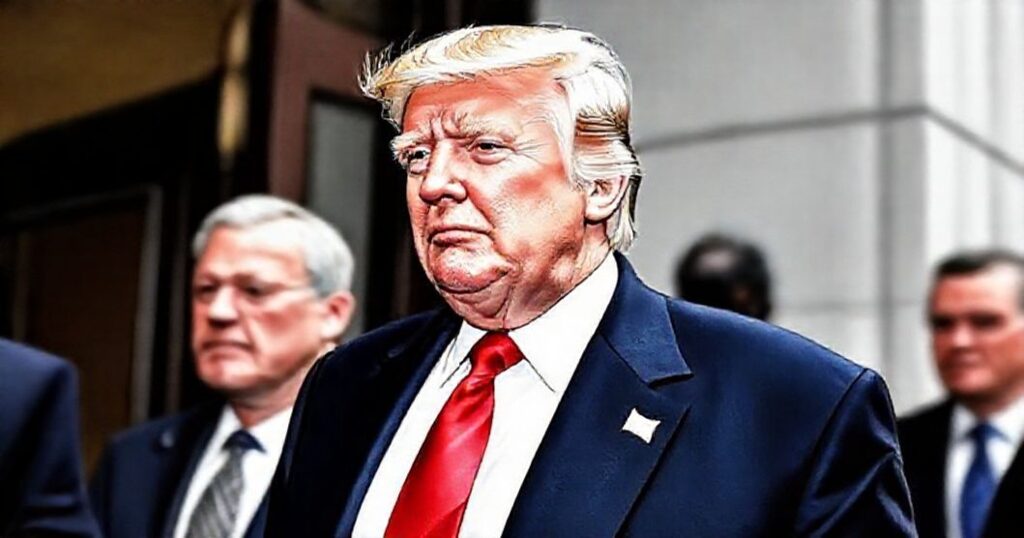
The Unprecedented Legal Battle Begins
In a moment that will be etched into the annals of American history, former President Donald J. Trump appeared in a Manhattan courtroom to formally plead not guilty to 34 felony counts of falsifying business records in the first degree. This landmark proceeding marks the first time a former U.S. commander-in-chief has faced criminal charges, signaling a transformative era for the American judiciary and the political landscape. The atmosphere surrounding the Lower Manhattan courthouse was one of intense scrutiny, as global media outlets and legal experts gathered to witness a procedural event with profound national implications.
The Core Story: Understanding the Charges
The indictment, unsealed by Manhattan District Attorney Alvin Bragg, centers on allegations that Mr. Trump orchestrated a scheme to influence the 2016 presidential election by suppressing negative information. According to the prosecution, the 34 counts of falsifying business records involve entries made in the Trump Organization’s books to conceal payments made to third parties. Under New York law, falsifying business records is typically a misdemeanor, but it can be elevated to a Class E felony if the intent to defraud includes an intent to commit or conceal another crime.
Prosecutors argue that these records were manipulated to disguise the true nature of the payments, characterizing them as legal expenses when, in fact, they were part of a broader strategy to maintain a favorable public image during a critical campaign period. Mr. Trump’s legal team has vigorously denied these claims, asserting that the charges are politically motivated and lack a solid legal foundation.
Expert Analysis: The Legal and Political Stakes
Legal analysts suggest that the prosecution’s strategy hinges on a complex interpretation of state and federal laws. To secure a felony conviction, District Attorney Bragg must prove not only that the records were falsified but that the action was taken to further another underlying crime, such as a violation of election laws. This legal theory is expected to be the primary battleground for the defense, which will likely file motions to dismiss based on jurisdictional challenges and the statute of limitations.
From a political perspective, the arraignment introduces an unprecedented variable into the 2024 election cycle. While legal proceedings of this magnitude would traditionally sideline a candidate, Mr. Trump has utilized the situation to galvanize his base, framing the indictment as a ‘witch hunt.’ This creates a unique tension between the slow-moving wheels of justice and the fast-paced nature of a national political campaign.
Industry Impact: Media, Law, and Public Policy
The ripple effects of this case extend far beyond the courtroom. The media industry has seen a massive surge in engagement, with cable news and digital platforms reporting record-breaking traffic during the arraignment. Furthermore, the legal sector is experiencing a period of intense activity, as firms specializing in white-collar defense, constitutional law, and political consulting are being tapped for their expertise. This case serves as a catalyst for a broader discussion on the transparency of corporate records and the ethical obligations of high-profile public figures.
Career and Job Implications for Professionals
For the JobHouse Global audience, this event highlights several emerging trends in the labor market. The demand for highly skilled legal professionals, including paralegals, litigation support specialists, and compliance officers, is projected to rise as high-stakes litigation becomes more frequent in the public eye. Additionally, the case underscores the importance of ‘Crisis Management’ and ‘Public Relations’ as critical skills in the modern economy. Companies are increasingly seeking professionals who can navigate complex political environments and mitigate reputational risks.
For students and early-career professionals in the legal and political science fields, this case provides a live laboratory for studying judicial procedure and the intersection of law and politics. It also emphasizes the growing need for investigative journalists and fact-checkers who can parse complex legal filings and provide objective analysis in a polarized information environment.
Conclusion: A Test for the Rule of Law
As the legal process unfolds, the eyes of the world remain fixed on the New York judicial system. The outcome of this case will likely set precedents for how the law is applied to the highest levels of government. Regardless of the verdict, the arraignment of a former president serves as a stark reminder of the principle that no individual is above the law, while simultaneously testing the resilience of American democratic institutions. For professionals and citizens alike, staying informed on these developments is essential for understanding the shifting dynamics of global governance and the future of the American legal framework.
Source Credit: This report is based on official court filings and reporting from the Associated Press and Reuters.
Source: Associated Press and Reuters