
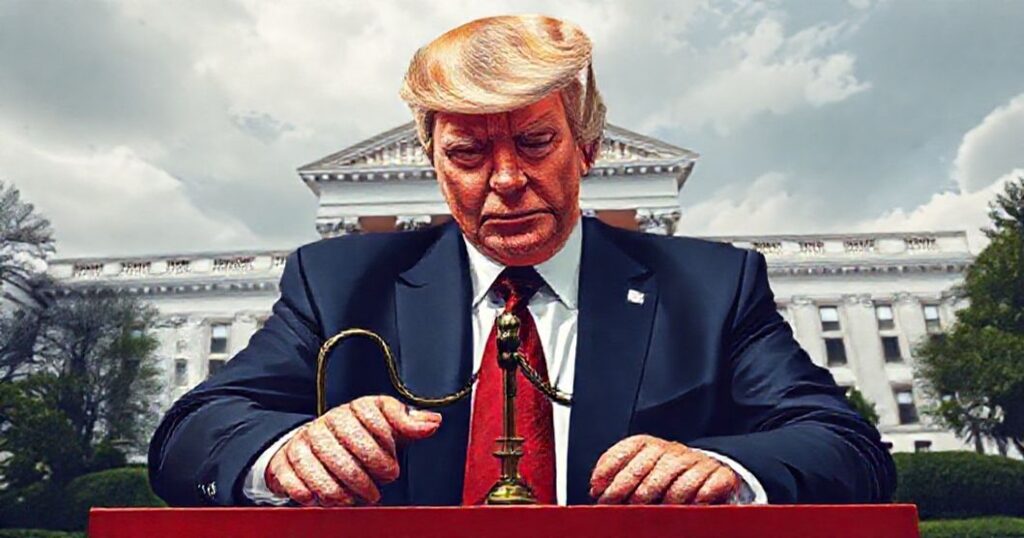
The Unprecedented Intersection of Law and Executive History
In a moment that will be etched into the annals of American constitutional history, the United States faces a legal scenario without modern precedent. As a former president prepares for a high-profile court appearance following a federal indictment, the global community is watching more than just a criminal proceeding; it is witnessing a profound stress test of the democratic framework. This event transcends partisan politics, touching upon the fundamental principle that no individual is above the law, while simultaneously raising questions about the stability of the executive branch’s legacy.
The Core Story: Legal Framework and Procedural Realities
The indictment centers on specific allegations concerning the handling of classified documents and potential obstruction of justice. Unlike civil litigation, a federal criminal indictment carries the weight of the Department of Justice, involving rigorous evidentiary standards and a grand jury process. The upcoming court appearance is primarily procedural—an arraignment where the defendant is formally notified of the charges and enters a plea. However, the logistical scale is massive, involving coordinated efforts between the Secret Service, local law enforcement, and the federal judiciary to maintain security and public order. Legal scholars note that the discovery phase of this trial will likely be one of the most complex in history, involving thousands of pages of sensitive data and testimonies from high-ranking officials.
Expert Analysis: Constitutional and Geopolitical Significance
Legal analysts argue that this case hinges on the interpretation of the Presidential Records Act and the Espionage Act. The prosecution must demonstrate not only that sensitive materials were retained but that there was a ‘willful’ intent to withhold them from the proper authorities. Conversely, the defense is expected to lean heavily on the concept of executive privilege and the argument of selective prosecution. Geopolitically, this case is being observed by allies and adversaries alike. It serves as a litmus test for the resilience of the U.S. judicial system. If the process is perceived as fair and transparent, it reinforces the strength of American institutions; if it is seen as purely political, it could further polarize an already divided national landscape.
Industry Impact: Media, Legal, and Political Economies
The ripple effects of this indictment are felt across multiple industries. The legal sector, particularly in Washington D.C. and Florida, has seen a surge in demand for elite white-collar defense teams and constitutional experts. The media industry is experiencing a significant spike in engagement, with news networks and digital publishers pivoting their entire content strategies to cover the trial’s developments. Furthermore, the political consulting industry is navigating a new reality where legal developments directly dictate campaign fundraising and strategy. Market analysts have also noted that while the initial news caused minor volatility in the futures markets, the long-term economic impact depends on how the trial affects the predictability of the upcoming election cycle.
Career and Job Implications: Opportunities in a Volatile Climate
For the JobHouse Global audience, this legal milestone highlights several emerging trends in the professional world. First, there is a growing demand for ‘Compliance and Regulatory Affairs’ specialists. As legal oversight of high-ranking officials and corporate executives tightens, organizations are hiring experts who can navigate complex disclosure laws and records management. Second, the field of ‘Legal Technology’ is expanding rapidly. Managing the vast amounts of data involved in such high-stakes litigation requires advanced AI-driven discovery tools and cybersecurity measures, creating roles for tech-savvy legal professionals. Third, ‘Crisis Management’ and ‘Public Relations’ have become essential for any entity caught in the periphery of such high-profile cases. Students and professionals in law, political science, and data forensics should view this as a signal to specialize in areas that bridge the gap between technology and the law. The ability to parse complex legal documents and communicate them clearly is a high-value skill in the current job market.
Conclusion: The Long Road Ahead
As the court appearance concludes, the legal journey is only beginning. The trial of a former president will likely span months, if not years, involving numerous motions, appeals, and public debates. For the global workforce, this era of legal scrutiny serves as a reminder of the importance of institutional integrity and the constant evolution of professional standards. Whether one approaches this from a legal, political, or economic perspective, the outcome will undoubtedly redefine the boundaries of power and the expectations of accountability for decades to come.
Source: Associated Press and Reuters Legal Reports