
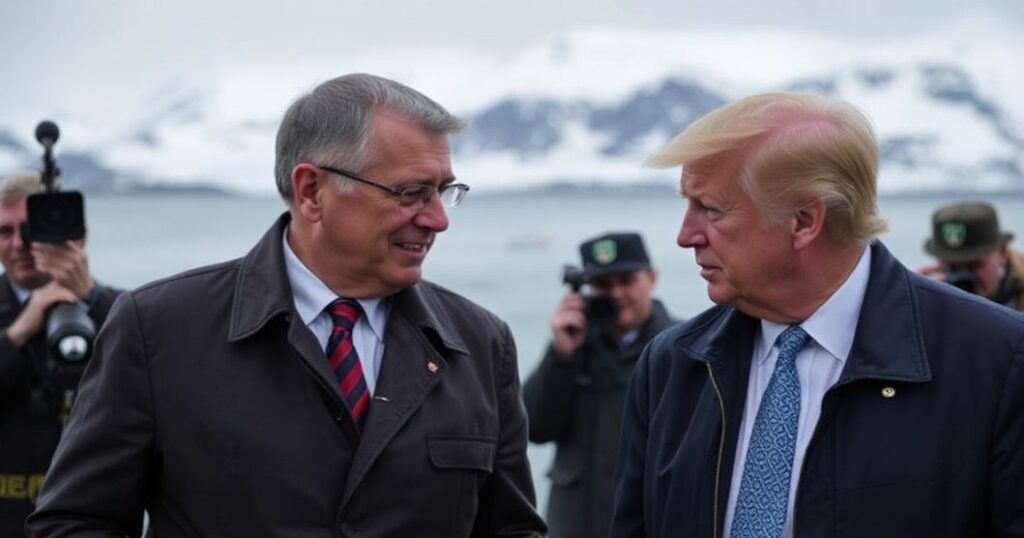
The diplomatic relationship between the Kingdom of Denmark and the United States has entered a period of heightened friction following the Trump administration’s decision to appoint a special envoy to Greenland. In a move that underscores the growing geopolitical significance of the Arctic, the Danish Ministry of Foreign Affairs has officially summoned the U.S. Ambassador to provide clarification on the appointment of Jeff Landry to this newly created position. The decision has sparked a robust debate regarding national sovereignty, diplomatic protocol, and the strategic future of the North Atlantic.
A Challenge to Sovereign Protocol
At the heart of the dispute is the perceived bypass of traditional diplomatic channels. Greenland, while an autonomous territory with its own domestic government, remains a constituent part of the Kingdom of Denmark. Under the current constitutional framework, Copenhagen retains authority over foreign and security policy. The appointment of a U.S. Greenland Special Envoy is seen by many in the Danish government as an attempt to treat Greenland as a separate entity, potentially undermining the unity of the Danish Realm. Foreign Minister Lars Løkke Rasmussen has signaled that while Denmark welcomes cooperation, such initiatives must respect the established hierarchy of international relations.
The Role of Jeff Landry
The selection of Louisiana Governor Jeff Landry for the role of special envoy has raised eyebrows in both Copenhagen and Nuuk. Landry, a political ally of President Trump, is expected to focus on economic development, resource extraction, and security cooperation. However, the lack of prior consultation with the Danish government has led to concerns that the U.S. is adopting a more assertive, unilateral approach to the region. This development follows years of intermittent tension, most notably in 2019 when President Trump publicly expressed interest in the United States purchasing Greenland—a proposal that was flatly rejected by both Danish and Greenlandic leaders as ‘absurd.’
The Strategic Value of the Arctic Frontier
The urgency behind the appointment of a U.S. Greenland Special Envoy cannot be decoupled from the broader global race for Arctic dominance. As polar ice continues to recede, new shipping lanes are opening, and vast deposits of rare earth minerals, oil, and gas are becoming more accessible. Greenland sits at a critical juncture of these emerging trade routes. Furthermore, the Thule Air Base (Pituffik Space Base) remains a cornerstone of the U.S. ballistic missile early warning system. Washington views Greenland not just as a neighbor, but as a vital security asset in the face of increasing Russian and Chinese activity in the High North.
Economic Implications and Labor Markets
From a global market perspective, the increased U.S. focus on Greenland signals a potential influx of American capital into the region’s mining and infrastructure sectors. For professionals in the energy, engineering, and logistics industries, this diplomatic maneuvering suggests a long-term shift toward industrializing the Arctic. However, for these opportunities to materialize, a stable regulatory and diplomatic environment is required. The current tension between Washington and Copenhagen creates uncertainty for investors who rely on clear legal frameworks and international cooperation to manage large-scale projects in harsh environments.
The Path Forward for Transatlantic Relations
The summoning of an ambassador is a significant diplomatic gesture, usually reserved for serious disagreements. It serves as a formal ‘yellow card,’ indicating that Denmark expects a higher level of transparency and respect for its sovereign boundaries. Moving forward, the U.S. State Department will need to balance its strategic ambitions with the need to maintain a strong alliance with Denmark, a key NATO partner. Experts suggest that a tripartite dialogue involving Washington, Copenhagen, and Nuuk is the only sustainable way to address the unique challenges of the 21st-century Arctic.
Conclusion
The appointment of Jeff Landry as the U.S. Greenland Special Envoy has undoubtedly stirred the waters of the North Atlantic. While the U.S. seeks to secure its interests in a rapidly changing world, the reaction from Denmark serves as a reminder that traditional alliances are built on mutual respect and established protocols. As the diplomatic community watches closely, the resolution of this tension will set the tone for Arctic governance and transatlantic cooperation for years to come. JobHouse Global News will continue to monitor these developments and their impact on international trade and professional sectors.
Source: News Desk Report