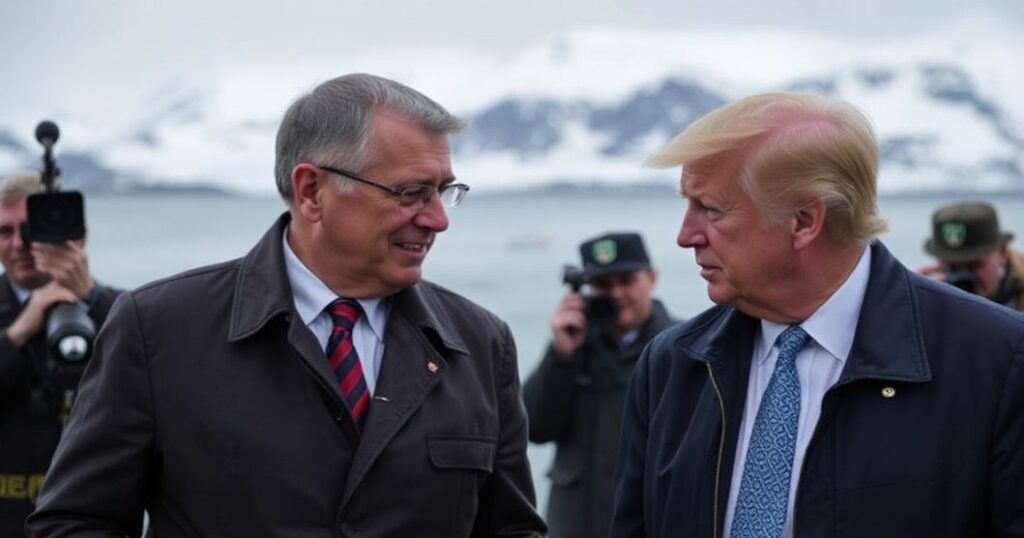

In a significant escalation of transatlantic friction, the Danish government has officially announced its intention to summon the United States Ambassador to Copenhagen. This move comes in direct response to the recent appointment by the Trump administration of Jeff Landry, the Governor of Louisiana, as a U.S. Special Envoy to Greenland. The diplomatic maneuver highlights a deepening rift between Washington and Copenhagen regarding the sovereignty and strategic future of the world’s largest island.
The Core of the Contention: Sovereignty and Protocol
The decision to summon the U.S. Ambassador is not merely a formality; it represents a stern rebuke of what Danish officials perceive as an infringement on the constitutional framework of the Kingdom of Denmark. While Greenland maintains a high degree of autonomy over its domestic affairs, the Danish Constitution dictates that foreign, security, and monetary policies are managed by Copenhagen. The appointment of a dedicated envoy to Greenland, without what Denmark considers proper bilateral consultation, is viewed as an attempt to bypass the central government.
Danish Prime Minister Mette Frederiksen has historically been firm on this stance, famously dismissing previous discussions regarding the sale of Greenland as “absurd.” The current administration in Copenhagen views the creation of a Special Envoy position as a continuation of a policy that seeks to treat Greenland as a separate entity rather than an integral part of the Danish Commonwealth. This latest development has forced a diplomatic showdown that tests the resilience of U.S.-Denmark diplomatic relations.
Geopolitical Implications of the Special Envoy
The appointment of Jeff Landry is seen by geopolitical analysts as a strategic move to secure American interests in the Arctic. Greenland is increasingly becoming a theater for great power competition, with the United States, Russia, and China all vying for influence in the region. The island is home to the Pituffik Space Base (formerly Thule Air Base) and holds vast, untapped reserves of critical minerals essential for high-tech manufacturing and green energy transitions.
Why Jeff Landry?
The selection of a high-profile political figure like Jeff Landry suggests that the U.S. administration intends to prioritize economic and resource-based partnerships directly with the Greenlandic government in Nuuk. Landry’s background in energy-rich Louisiana is viewed by some as a signal that the U.S. is interested in Greenland’s potential for oil, gas, and rare earth element extraction. However, this “direct-to-Nuuk” approach is precisely what irritates the leadership in Copenhagen, who insist that all international agreements must flow through the proper diplomatic channels established in the Danish capital.
Historical Context and the “Purchase” Narrative
To understand the current tension, one must look back to 2019, when the Trump administration first floated the idea of the United States purchasing Greenland. While the proposal was met with mockery and swift rejection from both Danish and Greenlandic leaders, it signaled a fundamental shift in U.S. foreign policy toward the Arctic. The appointment of a Special Envoy is seen as a more sophisticated, though no less controversial, evolution of that same objective: to increase American presence and influence on the island.
The Danish Ministry of Foreign Affairs has emphasized that while they value the strategic partnership with the United States, particularly within the framework of NATO, such cooperation must respect the territorial integrity of the Kingdom. The summoning of the ambassador is a clear signal that Denmark will not allow its role in Arctic governance to be marginalized.
The Impact on Transatlantic Relations and Global Markets
The diplomatic spat has broader implications for the stability of the Arctic Council and the cohesion of Western allies. As the climate changes and Arctic shipping routes become more viable, the strategic value of Greenland will only increase. For global investors and market analysts, this tension introduces a layer of political risk regarding future mining and infrastructure projects on the island.
Key Takeaways for Global Stakeholders:
- Diplomatic Sensitivity: The sovereignty of Greenland remains a non-negotiable point for the Danish government, requiring all international actors to navigate complex tripartite relations.
- Resource Competition: The U.S. focus on Greenland underscores the global race for critical minerals and Arctic security.
- Institutional Integrity: The outcome of this dispute will likely set a precedent for how the U.S. interacts with autonomous territories of its close allies.
Conclusion: The Path Forward
As the U.S. Ambassador prepares to meet with Danish officials, the international community will be watching closely. Whether this tension leads to a recalibration of the envoy’s role or a further hardening of positions remains to be seen. What is certain is that the Greenland question is no longer a peripheral issue; it is a central pillar of modern U.S.-Denmark diplomatic relations. For the partnership to remain productive, both nations must find a way to balance American strategic interests with Danish constitutional sovereignty, ensuring that the Arctic remains a region of cooperation rather than conflict.
Source: JobHouse Global News Desk