
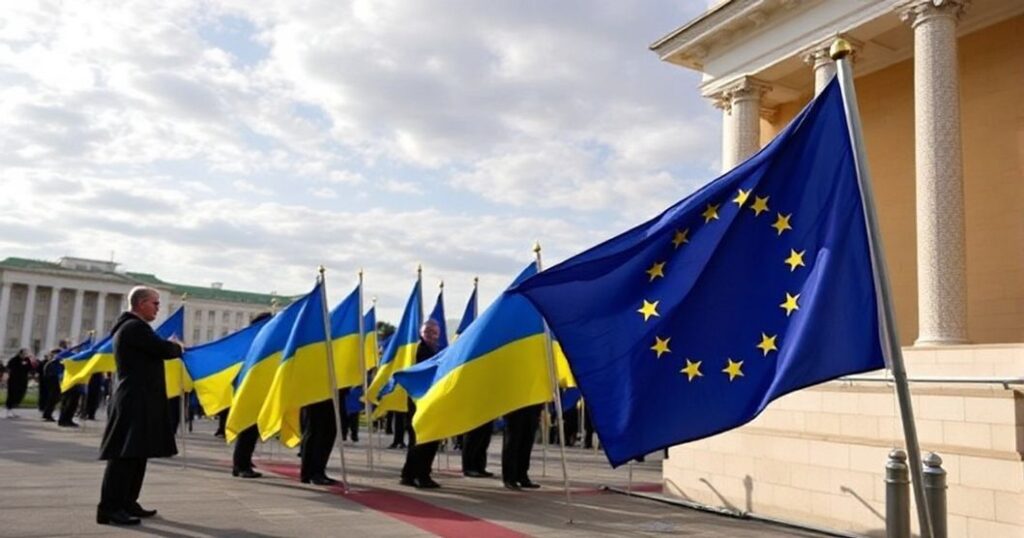
Strengthening the Eastern Flank: The EU’s Long-term Commitment
In a landmark decision that underscores the European Union’s commitment to regional stability, member states have reached a consensus to allocate a staggering €90 billion (approximately $105.5 billion) in aid to Ukraine. This financial commitment, announced by the EU Council President on Friday, is designed to span the fiscal years of 2026 and 2027, providing a crucial lifeline as the nation continues to navigate the complexities of conflict and internal restructuring.
The move represents a significant shift from the reactive, short-term funding models seen in the early stages of the conflict toward a more structured, predictable financial framework. By securing these funds years in advance, the European Union is signaling to both its allies and adversaries that its support for Kyiv remains unwavering, regardless of shifting political tides elsewhere in the world.
The Core Story: Strategic Financial Planning
The newly approved package is not merely an emergency fund; it is a comprehensive financial roadmap. The €90 billion allocation is expected to be distributed across several critical pillars, including direct budgetary support to keep the Ukrainian government operational, humanitarian assistance for displaced populations, and military aid to bolster national defense. This multi-year approach allows the Ukrainian government to engage in long-term fiscal planning, a necessity for a nation looking toward eventual reconstruction and integration into the European single market.
According to official reports, the funding will be drawn from a combination of the EU’s central budget and contributions from individual member states. While the technicalities of the disbursement are still being finalized, the consensus reached on Friday marks a major diplomatic victory for the European Council, overcoming previous internal divisions regarding the scale of long-term financial exposure.
Expert Analysis: A Geopolitical Signal
Geopolitical analysts view this $105 billion commitment as a strategic deterrent. By formalizing aid through 2027, the EU is effectively insulating its foreign policy from the potential volatility of upcoming election cycles across the continent and across the Atlantic. “This is about strategic patience,” notes one senior diplomat. “It demonstrates that the European Union is prepared for a marathon, not just a sprint, in its support for Ukrainian sovereignty.”
Furthermore, this package serves as a precursor to Ukraine’s formal accession process. By aligning Ukraine’s financial reporting and public procurement systems with EU standards as a condition of the aid, the bloc is effectively accelerating the technical integration of the country into European institutions.
Industry Impact: Reconstruction and Defense
The scale of this funding will have profound effects on several key industries within the EU and Ukraine. The primary beneficiaries include:
- Defense and Aerospace: Continued military aid will drive demand for European-made hardware, benefiting defense contractors in Germany, France, and Poland.
- Construction and Infrastructure: A significant portion of the aid is earmarked for the ‘Ukraine Facility,’ focusing on rebuilding critical infrastructure, which will require massive imports of steel, cement, and engineering expertise.
- Technology and Telecommunications: Digitizing Ukraine’s public services and securing its cyber-infrastructure remain top priorities for the EU funding.
Career and Job Implications for Global Professionals
For the JobHouse Global community, this announcement signals a multi-year surge in demand for specific professional skill sets. The influx of $105 billion into a developing economy necessitates a massive workforce to manage and execute large-scale projects. We anticipate a heightened demand for:
- Project Managers and Engineers: Specifically those with experience in large-scale infrastructure and energy projects.
- Public Procurement Specialists: Professionals who understand EU regulatory frameworks will be essential for ensuring funds are spent transparently.
- NGO and Humanitarian Workers: The continued need for social services and displacement management will require thousands of dedicated professionals.
- International Law and Compliance Experts: Navigating the legalities of cross-border aid and reconstruction contracts will be a high-growth area.
Students and job seekers should consider focusing on certifications in international project management (PMP), European law, or logistics to position themselves for the roles that will inevitably emerge from this historic funding cycle.
Conclusion
The approval of the $105.5 billion aid package marks a transformative moment in European history. It transitions the EU from a provider of emergency relief to a primary architect of Ukraine’s future. While the road ahead remains fraught with geopolitical challenges, this financial certainty provides a foundation for economic resilience and eventual recovery. For global professionals, it represents a call to action to contribute to one of the most significant reconstruction efforts of the 21st century.
Source: EU Council Press Office