
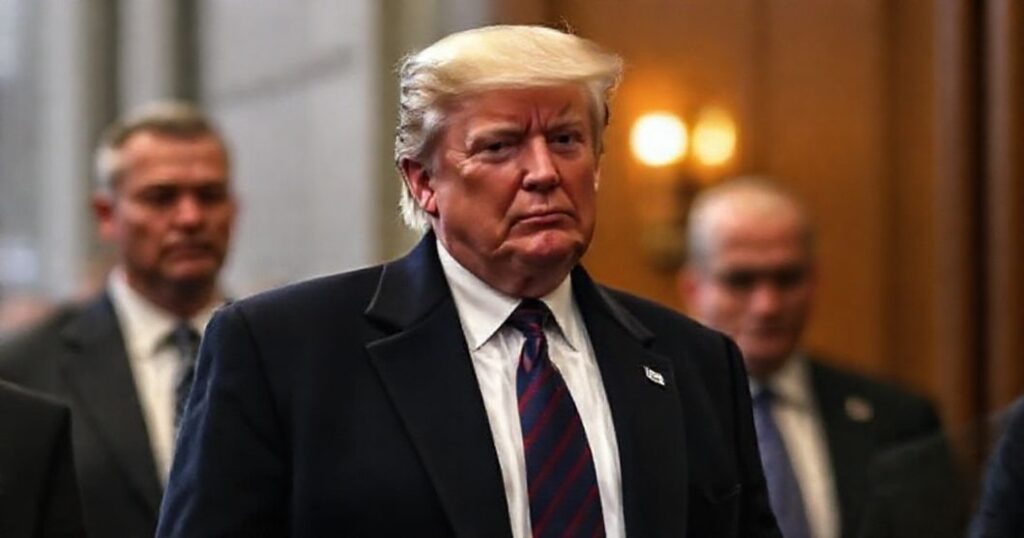
The Unprecedented Arraignment of a Former President
In a development that marks a historic shift in the American legal landscape, former United States President Donald J. Trump appeared in a Manhattan courtroom to enter a plea of not guilty to 34 felony counts of falsifying business records. The proceedings represent the first time a former commander-in-chief has faced criminal charges, setting a profound precedent for the nation’s judicial system. This case is not merely a political event; it is a significant test of the principle that the rule of law applies equally to all citizens, regardless of their former station in government.
The Core Story: Breaking Down the 34 Felony Counts
The indictment, unsealed by Manhattan District Attorney Alvin Bragg, focuses on a series of financial transactions and internal record-keeping entries within the Trump Organization. Prosecutors allege that these entries were part of a calculated scheme to suppress damaging information during the 2016 presidential election. Specifically, the 34 counts relate to the falsification of business records in the first degree, a Class E felony in New York. The prosecution contends that these records were manipulated to disguise ‘hush money’ payments as legitimate legal expenses.
Under New York state law, the act of falsifying business records is typically a misdemeanor. However, the charges are elevated to felonies when the intent to defraud includes the intent to commit or conceal another crime. In this instance, District Attorney Bragg has pointed toward potential violations of state and federal election laws, as well as tax implications. The defense team has dismissed these claims, arguing that the prosecution is an overreach and lacks a solid legal foundation, setting the stage for a protracted legal battle.
Expert Analysis: Legal Complexity and Judicial Integrity
Legal analysts suggest that the prosecution’s strategy relies on a complex ‘linking’ theory that will be heavily debated during pre-trial motions. The burden of proof lies with the District Attorney to demonstrate not only that the records were false, but that they were falsified with the specific intent to facilitate or hide a secondary crime. This high bar for conviction means that the evidentiary phase will be scrutinized by legal experts globally. On the other side, the defense is expected to challenge the statute of limitations and the jurisdiction of a local prosecutor over matters that touch upon federal campaign finance issues.
Industry Impact: Legal, Media, and International Relations
The ramifications of this trial extend deep into the legal and media sectors. Law firms specializing in white-collar crime and constitutional law are seeing a significant increase in demand for analysis and consultancy. The media industry is navigating a surge in global interest, requiring journalists to provide nuanced reporting that balances legal facts with political context. Internationally, the case is viewed as a litmus test for the stability of American democratic institutions, influencing how foreign investors and governments perceive the consistency of the U.S. legal framework.
Career and Job Implications for Professionals
For the JobHouse Global audience, this landmark case offers vital lessons in professional ethics and corporate governance. The focus on record-keeping highlights the critical role of compliance in the modern workplace. Professionals in finance, accounting, and legal operations must remain vigilant about the accuracy of internal documentation, as even administrative actions can have severe legal consequences under regulatory scrutiny.
- Growth in Compliance Careers: The case underscores the necessity for robust internal audit and compliance departments. Professionals with expertise in regulatory adherence are likely to see expanded opportunities as organizations prioritize risk mitigation.
- Emphasis on Ethical Leadership: This serves as a reminder for those in management positions that transparency is a non-negotiable asset. Educational institutions and MBA programs are expected to integrate this case into their ethics and business law curricula.
- Demand for Legal Support Roles: The complexity of such high-profile litigation creates a ripple effect in the job market for paralegals, legal researchers, and forensic accountants who can manage vast quantities of discovery data.
Conclusion: A New Chapter in Legal Accountability
The arraignment of Donald J. Trump is the beginning of a legal process that will likely span months or even years. As the judicial system moves forward, the focus will remain on the strength of the evidence and the interpretation of New York statutes. For global professionals, the case is a stark reminder of the importance of institutional integrity and the far-reaching impact of legal accountability. Regardless of the outcome, the professional world will continue to draw lessons from this historic intersection of politics, business, and the law.
Source: Associated Press and Reuters